

Central Committee statement from the Communist Party of Iran on the two week ceasefire
2026-04-09
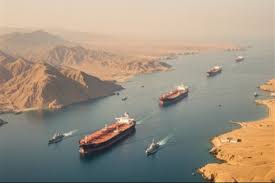
With only a few hours left before the deadline set by Donald Trump to reopen the Strait of Hormuz, people in Iran expected a new wave of attacks by US and Israeli fighter bombers on economic infrastructure, railways, bridges, highways, universities, and production centers. Trump had frantically threatened that if Iran failed to accept Washington’s terms by 8 p.m. Eastern Time, he would wipe a civilization off the face of the earth. Yet on the evening of Tuesday, April 7, 2026, apparently in response to a request from the Prime Minister of Pakistan and on the condition that the Islamic government accept a two week ceasefire and reopen the Strait of Hormuz, he announced a two week suspension of the war. This deceitful figure, lacking historical insight, had already known about progress in behind the scenes talks on a ceasefire and reopening the Strait of Hormuz, even as he issued these deranged public threats. As diplomacy advanced, he intensified his rhetoric to present the development as a display of US military dominance and victory. For this reason, he dismissed warnings from legal experts, international officials, and even American public opinion about the commission of war crimes.
Behind these claims and this narcissism, the reality shows that the forty day war, meant to display the dominance of US imperialism and Trump’s unilateral power on the global stage, instead exposed United States weaknesses, limits, and strategic confusion. Launching a devastating and costly war based on the illusion that killing Khamenei would collapse the structure of the Islamic Republic, facing surprise at the closure of the Strait of Hormuz, which affected the entire global oil and gas market, and failing to secure support from Europe and NATO all point to the failure of US strategy in this war. This war will enter history as another stage in the decline of US empire and global hegemony.
Although the Israeli government failed to achieve its stated goals of overthrowing the Islamic Republic, orchestrating a transfer of power over the heads of the people, installing Reza Pahlavi, and shaping its preferred regional order, it once again displayed its unmatched military power to its rivals in the Middle East.
For the Islamic Republic, this war marked a fight for survival, with the preservation of the system as its central political aim. It will no doubt present this ceasefire and any potential end to the war as a decisive victory. Yet behind these claims, the aftermath of the brutal killing of protesters during the nationwide uprising in January, along with the heavy blows and wounds inflicted by this war, run so deep that they will ultimately bring the Islamic Republic down.
The consequences of this war and the losses suffered will intensify the regime’s internal crisis and may even lead to bloody purges by the Revolutionary Guards. An economy already strained by a deepening structural crisis, entrenched corruption, and sanctions now also bears the heavy cost of rebuilding war damage. A regime that faced widespread hatred, anger, and public protest even before the war will, under the impact on people’s work, lives, and livelihoods, see a deeper rift with society and a worsening crisis of political legitimacy. The people of Iran view the Islamic Republic, along with its regional strategy, adventurism, and interventions in Middle Eastern conflict zones, as one of the main causes of this devastating war.
However, contrary to the claims of fascist monarchists and other bourgeois opposition forces who praised the US and Israeli war and bombings and insisted that the people of Iran wanted the war to continue, this two week ceasefire marks a gain for the anti-war movement and for the people of Iran. A small, disillusioned minority, influenced by imperialist media and bourgeois opposition forces, had placed hope in the overthrow of the Islamic Republic through foreign intervention and continued bombardment. They need to learn from this war that the Islamic Republic will fall not through external intervention or from the sky, but through the organized power of the masses.
The majority of workers and people in Iran, whose livelihoods and infrastructure have been shattered under bombardment and who counted the moments until an immediate end to the war, view this ceasefire as a gain for themselves and for the anti-war movement. However, a two week ceasefire does not mean the war has ended or that peace has taken hold. This ceasefire remains fragile. Since both the Trump administration and the Islamic Republic have set conditions for a final end to the war that do not align with the actual balance of forces on the ground, continued insistence by either side on these terms could reignite the conflict.
For this reason, the ceasefire does not mark the end of the disaster. For workers and the people of Iran, who struggle under intensified repression and face unprecedented unemployment, runaway inflation, poverty, and economic hardship, the struggle for survival, for life, and for freedom continues. There is no doubt that the Islamic Republic, with the Revolutionary Guards playing a leading role through a fascistic approach, will use the post war conditions to tighten security across society, intensify repression, and shift part of the cost of war destruction onto the people. However, workers and the people of Iran will not remain passive in the face of the Revolutionary Guards’ offensive. Although this imperialist and reactionary war pushed social and protest movements to the margins and buried them under its weight, these movements have not faded. They need time to recover from the exhaustion of war, regain strength, and rise again. They will return to the streets with renewed force.
Workers, the masses, and social movements must draw three key lessons from the mass uprisings of the past eight years. First, they must trust their own transformative social power more than ever. This power has driven the struggle to overthrow the Islamic Republic into a new phase and has left this criminal regime weakened. Second, the Islamic Republic, given its structure, will not fall through spontaneous, unorganized protests or uprisings. Its overthrow requires organized ranks, a unified national leadership, and a clear vision of what victory means. Third, these experiences again show the decisive role of the organized working class and its socialist movement in the political arena, as well as the importance of linking factory and street in overthrowing the Islamic Republic and driving any social change. Efforts along this path must expand and connect.
Down with the Islamic Republic!
Long live freedom, equality, and workers’ rule!
Long live socialism!
Central Committee of the Communist Party of Iran
April 8, 2026