

Workers at 113 Ports Worldwide Strike Against War: “Dockworkers Won’t Work for War”
2026-11-01
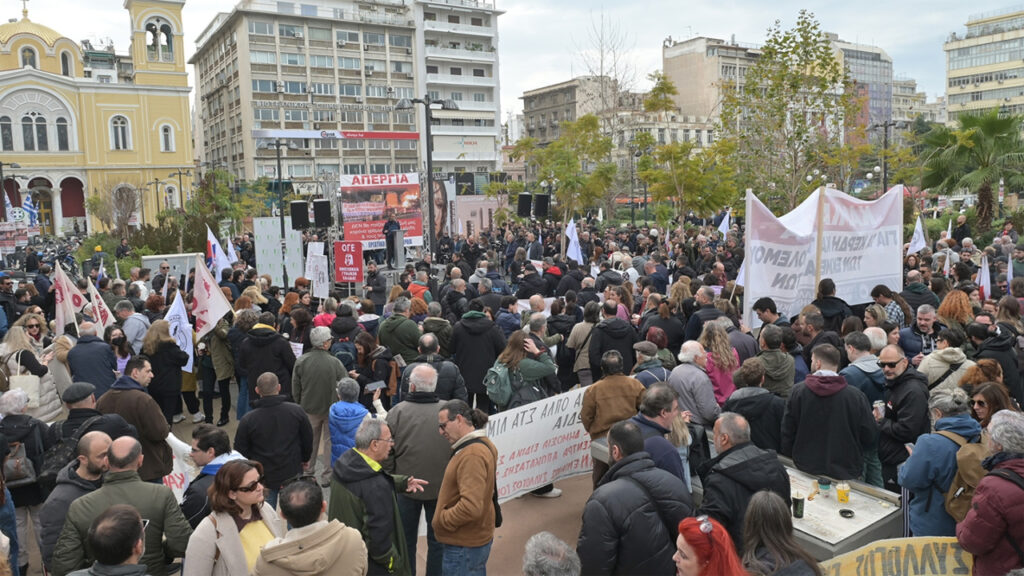
On Friday, 30 October 2026, in one of the largest dockworkers’ and maritime workers’ union actions in recent years, dockworkers and seafarers across five continents went on strike against the use of civilian ports to transport weapons and military equipment. More than 25 trade unions across 113 ports in 22 countries participated in the strike. The international action was initiated by port unions in Italy, France, Greece, the Spanish Basque Country, Turkey and Morocco, and expanded as organisations from other countries joined. The central demand of the strike was clear: ports must not become routes for the transport of weapons, ammunition and military equipment. The slogan of the strike, “Dockworkers Don’t Work for War,” succinctly expressed this position.
According to reports published by the organisers of the strike, the action affected more than 40 per cent of freight transport in the Mediterranean. The value of shipments potentially disrupted was estimated at more than $2 billion, and delays affecting approximately 52,000 containers were anticipated. In France, the CGT Federation of Ports and Docks had also called for a 24-hour strike at major ports, including Marseille, Le Havre, Dunkirk and Rouen. These figures reveal the global economy’s dependence on labour and the potential capacity of workers to bring the circulation of capital to a halt.
This extensive labour action has brought the connections between ports and the arms industry, as well as the economic and class character of contemporary warfare, more clearly into public view. The strike by workers across 113 ports worldwide against war demonstrates that war begins long before it reaches the battlefield: it is prepared in arms factories, transport networks, commercial ports, and the economic relations between states and capitalists. Weapons and military equipment are the products of a chain of production, accumulation, trade and transportation. Consequently, the struggle against war cannot be confined to protests against killing and destruction. It must also target the economic and class relations that turn war into a source of profit and an instrument of capital’s domination.
The significance of this strike stems from the strategic position occupied by dockworkers in the circuit of capital. It is true that capitalists own ports, ships and transport infrastructure, but the circulation of this entire system would be impossible without the labour of thousands of workers. This dependence is the source of the working class’s economic and social power. A strike at such a strategic point can disrupt the circulation of capital while also obstructing the physical transportation of the means of warfare.
These developments demonstrate that the continuation of war, including the devastating war in Gaza, does not depend solely on the decisions of military commanders. Arms manufacturers, transport companies, marine insurers, exporting states and commercial networks all play a role in the material reproduction of the war machine. Dockworkers’ strikes and their refusal to handle military cargo therefore constitute direct intervention in one of the links in this chain, challenging the claim that economic infrastructure is politically neutral. No factory, port or transport network operates independently of property relations and class interests.
A particularly significant feature of the dockworkers’ strike has been the cross-border coordination of workers speaking different languages and belonging to different nationalities. In pursuit of higher profits, capital crosses national borders and organises production, trade and logistics on a global scale, while workers often remain fragmented within national and organisational frameworks. The international dockworkers’ strike demonstrated that effectively confronting the global power of capital also requires the expansion of international working-class solidarity and organisation. Such solidarity acquires real meaning and power when it places workers’ common interests in opposition to those of capital.
This movement has also linked workers’ economic demands with the struggle against war. A 12 per cent wage increase through collective bargaining, improved workplace safety, a reduction of the working day to seven hours, and the provision of doctors aboard ships were among the demands raised. This connection is no coincidence. The same system that allocates enormous social resources to armaments and military interventions also imposes the burdens of inflation, low wages, job insecurity and deteriorating working conditions on the workforce.
The historical experience of the labour movement demonstrates that its advancement depends on linking the struggle for immediate demands and the fight against war with class consciousness, an independent political programme and organisation on a broad, coordinated scale. The dockworkers’ strike and their demands have shown that the struggle for peace can be connected to the struggle for a humane life and liberation from exploitation. From the perspective of the socialist struggle, ending the relations that reproduce exploitation, imperialist rivalry and war requires a struggle to dismantle capitalist rule and transfer political power to the working class. In this process, confining the struggle to parliamentary reforms can never serve as a substitute for workers’ independent struggle and organisation.
The formation of a revolutionary communist party, equipped with a clear programme, a coherent organisation and living, organic ties to the actual workers’ movement, is of fundamental importance to this vision. Such a party must be capable of connecting economic struggles, workers’ strikes and anti-war movements to a conscious and organised struggle to transform political and economic relations, without substituting itself for the working class’s own will and self-organisation.