

What does it take to cripple the Islamic Republic’s killing machine?
2026-01-12
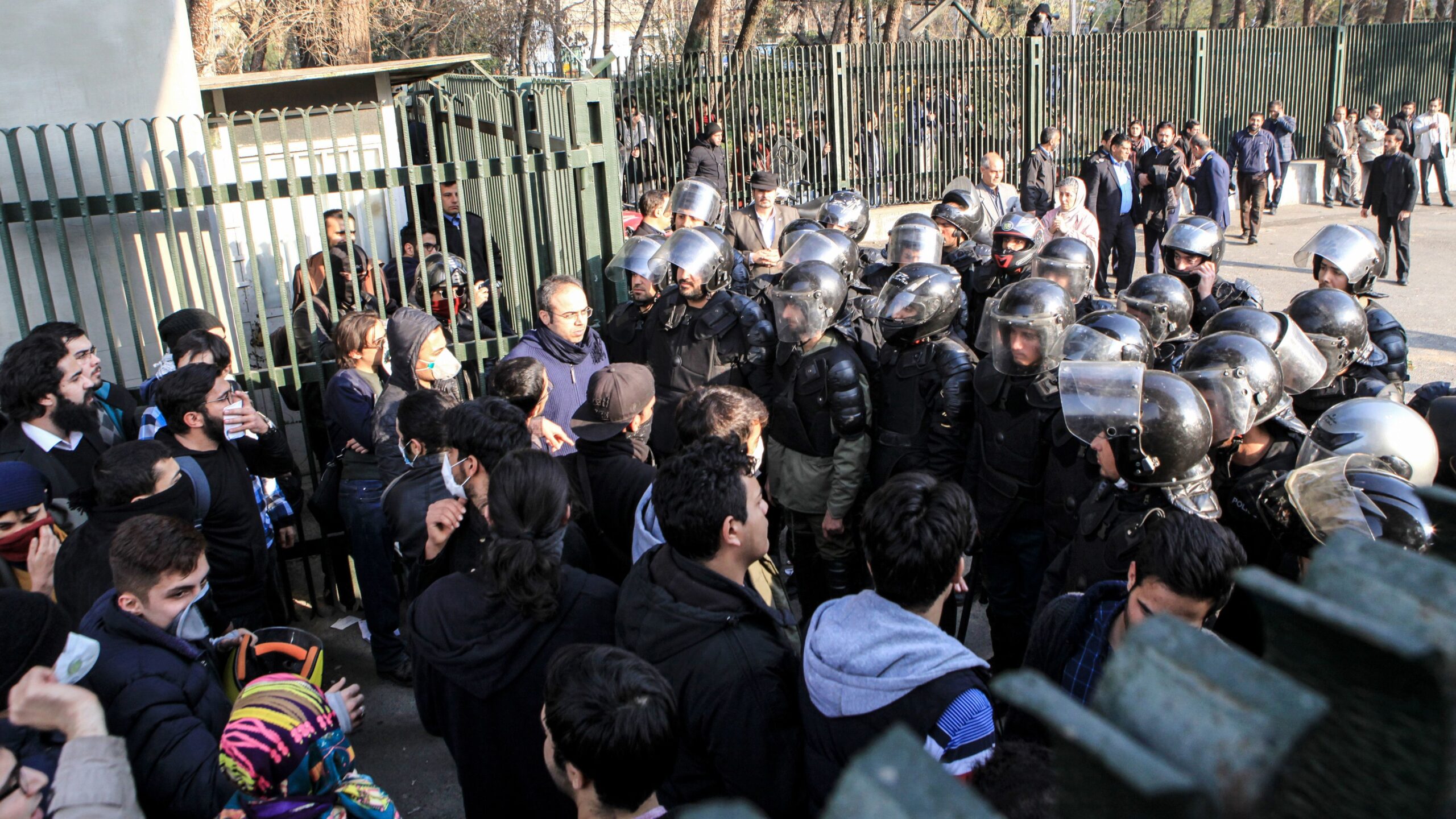
The criminal regime of the Islamic Republic, in order to confront the wave of the recent uprising, from the very first days effectively imposed an undeclared state of martial law by deploying security forces, police, and special units in various cities and in areas that had turned into focal points of the protests. By the fifteenth day of these protests, as a result of the regime’s repressive forces attacking the ranks of protesters and opening fire on them, more than 540 protesters have so far lost their lives, hundreds have been wounded, and over 10,700 people have been arrested and sent to prison.
The regime’s repressive forces, especially from the thirteenth day of the protests onward, have pushed brutality and savagery to their peak by cutting off the internet. The leaders and commanders of the Islamic government, who are unable to conceal the scale of the horrific crimes they have committed, attribute these killings to so-called “armed rioters.”
On Sunday, 11 January, the circulation of images and videos showing the lifeless bodies of protesters in Kahrizak, Tehran, as well as families anxiously and fearfully searching for any sign of their loved ones, displayed scenes of these appalling crimes. At the same time as these images and videos were published, the shutdown of internet lines has intensified concerns about the risk of such massacres spreading further.
There is no doubt that the regime’s ability to carry out bloody repression and commit such horrific crimes is one of the main obstacles to the mass expansion of this revolutionary movement. However, the key to overcoming this obstacle also lies in the hands of the masses themselves. For example, if protesting masses in Tehran and other Iranian cities take to the streets simultaneously at multiple points across the city and on the scale of several thousand people, and if they remain vigilant and neutralize the tactics and tricks used by security forces to turn protests into street battles and hit-and-run clashes, they can not only effectively neutralize the repressive power of the Islamic Republic’s mercenaries, but also shatter their cohesion.
In this regard, it is necessary for activists in social movements, through organizational work and by employing their own initiatives and experiences in information dissemination via social networks and other means, to ensure the advance of this protest movement by preparing and broadly mobilizing the masses for demonstrations. Along this path, it is essential for people to remain fully alert and not allow the Islamic Republic’s security and intelligence apparatus, by giving space to a group of reactionary monarchists, to derail their freedom-seeking and equality-oriented struggle, or to use this same tactic to damage the credibility of the people’s resistance and intensify repression against them.
Another essential requirement for the advance and victory of this protest movement is the entry of the working class into the arena through unified and nationwide strikes in factories, industrial complexes, and key centers of production and services, combining economic and political demands. These include, among others, the demand to end the repression of protests, the release of all detainees and political prisoners, and the abolition of the death penalty.
Despite the numerous obstacles it faces, the working class—by relying on the achievements of its struggles so far, on the presence of experienced leaders, on its experience in forming strike committees and factory committees that are the buds and embryos of workers’ councils, and on the experience it has gained in organizing hundreds of powerful strikes—can join this protest movement by launching nationwide strikes and, through this participation, paralyze the Islamic regime’s machinery of repression and killing. At the same time, the social-scale participation of the working class in these protests can provide a suitable foundation for advancing organization, creating class-based and mass organizations, and fostering the political organization of workers.
Another condition for ensuring the advance and victory of this movement lies in spreading a clear and revolutionary political strategy and outlook, fostering organization, and forming a nationwide leadership element. Therefore, one should not promise the masses an easy and effortless victory; rather, concrete steps must be taken to address the real needs of this movement and to provide the prerequisites for the revolutionary overthrow of the Islamic regime, while making the masses aware of the hardships and difficulties of this arduous and rocky path.
This movement is not merely a movement aimed solely at overthrowing the Islamic Republic. The masses who have risen up have entered the arena of protest and struggle against poverty and economic misery, against inequalities, deprivations, and discriminations that are rooted in Iran’s capitalist relations. In this sense, the movement not only places the overthrow of the Islamic Republic before itself as a goal, but by virtue of the nature of its demands, it is an anti-capitalist movement.
People are rightfully looking toward the latent potentials within Iran to establish a free, equal, and prosperous society. A clear picture of the government that will come to power after the Islamic Republic must be brought before the people. Therefore, a socialist horizon—the horizon of a council-based government of workers and the oppressed, and of people’s councils—must be set before this movement. Efforts should be made to further popularize, through broad political and propaganda campaigns, slogans such as “Bread, Work, Freedom, Council Governance” and “Freedom, Equality, Council Governance,” which have been raised by protesters in this revolutionary movement. A clear explanation of these slogans, and of the true meaning of freedom, equality, and council governance, must be brought to the masses.
It is necessary to issue persistent and uninterrupted warnings about the dangers of imperialist regime-change projects and the transfer of power over the heads of the people, and to make clear to the public the positions and political strategies of various factions of Iran’s bourgeois opposition aimed at derailing and defeating this movement. It is essential to openly expose the contradiction between their economic programs—which are nothing more than capitalism based on the free-market model and neo-liberalism under non-Islamic management—and the promises they make to the people regarding political and legal equality and equality between women and men. Those whose alternative is capitalism with non-Islamic management cannot promise freedom and prosperity to the people. Capitalism with non-Islamic management is also an authoritarian system of rule.
Communist Party of Iran
12 January 2026