

Statement of the Council for Cooperation of Iranian Leftist and Communist Forces
2025-06-27
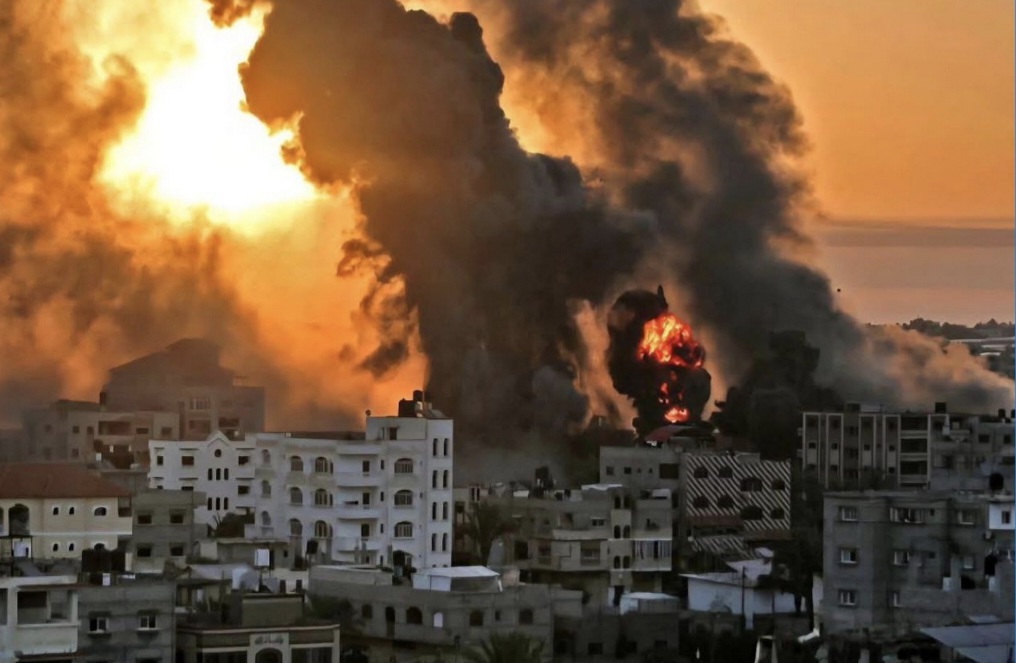
Iran’s Political Situation after the Twelve-Day War
The war between Israel and the Islamic regime, which began on June 13 with an Israeli offensive, was halted by Trump’s directive. The war was launched as a means to address the unresolved questions of the International Atomic Energy Agency and to enforce the Islamic regime’s submission to the U.S.—a submission that Khamenei referred to as a “forced and unacceptable peace.” There was no prospect of resolving these issues through negotiations between the regime and the IAEA, the three European countries, or through five rounds of talks with Trump’s envoy.
This ceasefire remains unstable, as the foundations and terms of the ceasefire agreement with the U.S. have yet to be made public, preventing a full assessment of the impact of the war and whether it truly forced a retreat by the Islamic regime.
In any ceasefire, both sides work to repair their damage and address weaknesses in preparation for a possible resumption of hostilities. The capacity of each side to prepare for renewed conflict becomes the basis for negotiation leverage. The persistent and visible rift between the Iranian people and the Islamic regime during the war, the collapse of the regime’s deterrence strategy—based on nuclear threats, ballistic missiles, and proxy forces—the infiltration of foreign (especially Israeli) intelligence agencies into the regime’s highest institutions, and the regime’s utter failure to defend the country’s airspace are all major weaknesses that cannot be resolved in the short term. This leaves the Islamic regime extremely vulnerable to any threat of renewed war during ceasefire negotiations.
The extent of the regime’s retreat or surrender may become a source of major internal conflict at the highest levels of power. However, as long as Khamenei maintains control, these factional disputes will not result in opposing political strategies; all factions will continue to act in unison against the people in order to preserve the regime as a whole.
The Islamic regime, monarchist fascists including Reza Pahlavi, and all other reactionary forces who supported one side in this war were among the losers of the twelve-day conflict. The monarchist fascists, although aligned with one side of the war, failed to mobilize the Iranian people as a ground force for the U.S. and Israel. The nationalist-religious groups, some liberals, and republicans also closed ranks with the Islamic regime and supported one side of the war.
In contrast, Iranian socialists, as well as the existing organizations within the country’s social and class-based movements, kept their distance from both reactionary sides of the war and maintained their internal cohesion. Among the entire opposition, the socialists and their class and social base are in the best position to continue their struggle as part of the revolutionary movement that began in December 2017, aiming for the revolutionary overthrow of the Islamic regime.
With repeated defeats on the global and regional stages and its inability to provide for even the basic needs of society, the Islamic Republic is in a fragile and chaotic state. Fearing the expansion of the revolutionary movement, it has intensified its repressive policies—which escalated during the war—through widespread arrests, torture, and executions.
Confronting the attempt to create a “cemetery silence” is now a top priority for labor activists, progressive social movements, and all leftist and communist forces. The continuation of grassroots mutual aid efforts during the war—indicative of societal maturity and the emergence of bottom-up solidarity—offers fertile ground for initiatives and collective resistance against repression.
Down with the capitalist Islamic Republic
Long live freedom
Long live socialism
Council for Cooperation of Iranian Leftist and Communist Forces
Wednesday, June 25, 2025
Signatories:
• Socialist Workers’ Unity
• Communist Party of Iran
• Worker-communist Party of Iran – Hekmatist
• Rahe Kargar (Workers’ Way) Organization
• Organization of the Fadaiyan (Minority)
• Minority Faction Core