

Statement of the Central Committee of the Communist Party of Iran on the Occasion of October 10, World Day Against the Death Penalty (2026)
2026-10-10
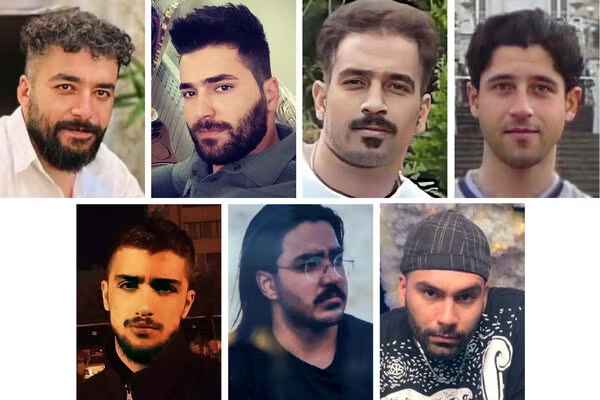
On the eve of October 10, the World Day Against the Death Penalty, the Islamic Republic has once again demonstrated that maintaining its grip on power is inseparable from widespread repression, imprisonment, torture, and executions. Since the very first days of its establishment, prisons, torture, and executions have been pillars of this regime’s rule. However, under the current wartime conditions, amid deepening economic and social crises and growing public discontent, the death penalty has increasingly been used to spread fear throughout society, suppress political opponents, and raise the cost of protest. Even when this criminal regime executes ordinary criminals, its aim is to intimidate society and terrorize its political opponents.
However, the death penalty under the prevailing political and class relations cannot be understood merely as a series of individual judicial decisions or as a response to “crime” and “creating insecurity”. Punishment, like crime, does not arise in a social vacuum. From the perspective of communist critique, we must ask: What social and economic conditions produce crime? What social relations determine which behaviors are classified as criminal and who is exposed to the harshest forms of punishment? And, ultimately, which social and political force has seized control of the machinery of execution?
From this perspective, executions in the Islamic Republic cannot be separated from the social and class relations that prevail in society. A large proportion of those facing death sentences come from among the impoverished, marginalized communities, and people who are surrounded by social ills within an unequal economic and social structure and who lack equal opportunities to defend themselves. Under the rule of this regime, baseless security-related charges have become a tool for eliminating political opponents and those who protest the existing state of affairs.
From the communist perspective, the issue is not simply whether the death penalty is “harsh” or “lenient”; the question is whether killing an individual can change the social conditions that give rise to crime. The answer is no. Executing an individual does not eliminate the social roots and causes of crime. If crime exhibits identifiable patterns and regularities at the societal level, it cannot be reduced solely to the will and moral character of the individual offender, only for that person to be eliminated and the public led to believe that the problem has been solved.
In this sense, the communist critique of the death penalty forms part of a more fundamental critique of an approach to crime that separates individuals from the social conditions in which they live. Rather than focusing solely on punishing the offender, we must identify the social relations through which poverty, deprivation, inequality, the denial of rights, and various forms of domination play a role in producing and reproducing crime. Punishing an individual without changing these relations, at best, targets the effect while leaving the cause untouched.
From this perspective, opposition to the death penalty is not merely an abstract defense of the “right to life”; it is a defense of the principle that society cannot eliminate the contradictions and social relations that produce crime and the denial of rights by eliminating an individual. A human being cannot simultaneously be regarded as a product of social conditions while being held abstractly responsible for an entire social problem, only to be put to death in the name of defending that very society’s security.
The escalation of executions in Iran must be understood in the context of the Islamic Republic’s deepening crisis. The threat of war, sanctions, the economic crisis, runaway inflation, declining purchasing power, unemployment, the collapse of parts of the public service system, and environmental destruction have made life increasingly difficult for millions of people. Meanwhile, society’s wealth and resources remain in the hands of a small minority and economic and political networks tied to those in power. Workers, women, retirees, nurses, teachers, and other working people have no choice but to resort to protests and strikes to fight for even their most basic demands. The government’s response to a significant portion of these demands has been to intensify repression and unleash a wave of executions.
From this perspective, the death penalty is also part of the state’s apparatus of coercion. A government that is unable to resolve economic and social crises by addressing society’s needs resorts to coercion and punishment to preserve the existing order and raise the cost of protest. The gallows and the noose cannot solve social crises; they can only eliminate people who challenge the existing order or restrict the scope of protest by instilling fear. For this reason, the struggle against the death penalty cannot be separated from the struggle for the freedom of political prisoners, the right to strike, the right to organize, and the right to protest. The struggle against the death penalty is not merely opposition to a particular form of punishment; it is a struggle against a system in which the state claims authority over human lives and uses judicial coercion to preserve the existing political and social order.
Nevertheless, Iranian society has not surrendered. The continuation of protests and strikes by workers and retirees, protest gatherings in Kurdistan, and demonstrations by job seekers all bear witness to this reality. The ongoing “Tuesdays Against Executions” campaign is a clear example of prisoners’ organized resistance to the execution machine. In its 140th week, the campaign has continued across 66 prisons. The expansion of this movement from within prisons, even as prisoners face the direct threat of execution, demonstrates that the policy of intimidation has failed to silence opposition to the death penalty.
The abolition of the death penalty must become an integral part of the common struggle of workers, women, young people, teachers, retirees, students, and all freedom-loving and equality-seeking forces throughout Iran. Every strike, every protest, and every campaign can become a bulwark against the machinery of repression. The release of political prisoners and the abolition of the death penalty must become common demands of social movements. Defending a prisoner sentenced to death is not merely a matter of defending an individual isolated from society; it is an effort to push back against the Islamic Republic’s strategy of repression and to defend society’s right to resist state coercion and to transform the conditions that perpetuate the denial of rights and repression.
When the struggle against the death penalty is linked to the struggle for freedom, equality, and the organization of workers, working people, and the oppressed to seize political power and transform social relations, it goes beyond opposition to an inhumane form of punishment and becomes a critique of the social relations that turn human beings into objects of coercion and punishment in order to preserve the existing order. Therefore, we must not only expand the struggle to halt executions, but also work to transform the social relations that produce and reproduce crime, the denial of rights, and repression.
Political prisoners must be freed!
The death penalty must be abolished!
Down with the Islamic Republic regime!
Long live freedom, equality, and workers’ government!
Central Committee of the Communist Party of Iran
October 4, 2026