

Statement of the Central Committee of the Communist Party of Iran on the occasion of October 10, the World Day Against the Death Penalty (2025)
2025-10-06
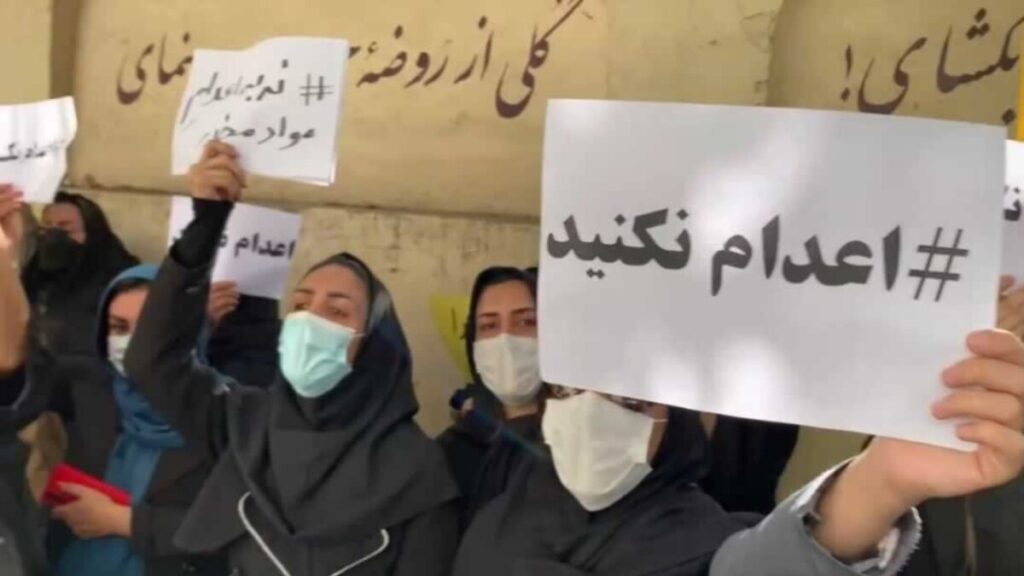
As we approach October 10, the World Day Against the Death Penalty, the Islamic Republic regime sees the expansion of executions as the key to its survival more than ever before. Although the arrest and imprisonment of political and social activists, along with torture and execution, have always been among the fundamental pillars of the Islamic Republic’s rule since its inception, under the current circumstances—when the regime is under international pressure and facing the threat of social explosion within Iran—the intensification of repression and the expansion of executions have taken on a strategic role for the regime’s leaders in their efforts to preserve the Islamic system.
But this tide must be turned and this strategy must be defeated. The gallows and executions can be swept down upon the regime’s leaders. The Islamic Republic faces a crisis of death — the greatest anxiety of its existence. At the international level it is under pressure from the United States and European governments to dismantle its nuclear programs, halt production of long-range ballistic missiles, end the delivery of military and financial assistance to proxy forces, and, in a word, abandon its regional ambitions. Inside Iran, the deepening economic crisis — a result of international sanctions — an out-of-control environmental crisis, and unprecedented inflation and price hikes have placed the Islamic government in a position where it cannot even provide bread and water, electricity, or clean air to breathe.
This situation—caught between war and peace and under the shadow of military threats from Israel and the United States—has pushed the internal conflicts and power struggles within the ruling factions to a decisive stage. The regime’s reformists and moderates have raised the banner of compromise and submission to the United States and European powers from within the government itself, seeing the survival of the Islamic system as dependent on reconciliation with the U.S. and the lifting of sanctions. In reality, the clerical establishment is deeply mired in crisis and divided among ruling factions, having lost its ability to justify or legitimize this chaotic state of affairs.
All of this is happening while an internal war—a class struggle—continues unabated, and the regime’s inability to respond to the demands of workers, retirees, nurses, and the impoverished layers of society has made the continuation and expansion of these movements inevitable.
In precisely such circumstances—when the nightmare of overthrow has deprived the regime’s leaders of sleep—the Islamic government has drawn its sword against its internal enemy: the workers, the toilers, and the risen people of Iran, taking prisoners to the gallows every single day.
According to reports, this criminal regime has executed more than 1,040 prisoners in just the first nine months of the current year, and following the twelve-day war, the number of these state killings has increased by 40% under the pretext of combating espionage. These figures, and the accelerating pace of the regime’s machinery of repression and execution, have placed Iran—relative to its population—at the top of the list of countries where the death penalty still exists.
The political goal of the leaders of the Islamic government in carrying out this wave of executions is to halt the growing tide of social and protest movements and to intimidate society. These executions—carried out under the guise of fighting violence and ensuring public safety, and at times conducted in public—have fueled a cycle of violence and vengeance, leaving deep wounds on the body and psyche of society, especially among the families of those executed and their children.
Nevertheless, the growing wave of social and protest movements—and the launch of the “No to Execution Tuesdays” campaign behind prison bars—demonstrate that intensified repression and the surge of executions have lost their former effectiveness, and society has not been intimidated.
Today, the accelerating pace of state killings carried out under the guise of enforcing inhumane death sentences is not a sign of power, but rather a sign of the regime’s fear and desperation in the face of the Iranian people’s freedom-seeking movement. This indicates that the strategy of intensifying repression and expanding executions as the key to the Islamic regime’s survival has begun to crack.
Therefore, while the struggle to abolish the death penalty is a cause that must always be pursued under any circumstances, its importance has become all the more vital today—in order to defeat the regime’s strategy of repression, ensure the advancement of social and protest movements, and defend the lives of the thousands who are currently on death row in the prisons of the Islamic Republic under these inhumane sentences.
As the “No to Execution Tuesdays” campaign reaches its eighty-eighth week—and prisoners in more than fifty prisons go on hunger strike every Tuesday to protest the death penalty—it is essential to honor this courageous campaign and to broaden and deepen the movement against the death penalty into a truly mass struggle.
October 10, the World Day Against the Death Penalty, can serve as another opportunity to intensify the struggle for the abolition of the death penalty in Iran and across the world. It is necessary and essential that the demand for the release of political prisoners and the abolition of the death penalty become central demands of the labor movement and all progressive social movements. Ultimately, through unification and nationwide expansion of workers’ strikes and mass protests, the Islamic Republic’s machinery of execution and repression will be paralyzed, its strategy for survival shattered, and the death penalty abolished.
The death penalty must be abolished!
Down with the Islamic Republic of Iran!
Long live freedom, equality, and workers’ rule!
Central Committee of the Communist Party of Iran
October 6, 2025