
Statement of the Central Committee of the Communist Party of Iran on the Occasion of November 25, International Day for the Elimination of Violence Against Women! (2026)
2026-11-21
November 25, the International Day for the Elimination of Violence Against Women, reminds us of the undeniable reality that violence against women is neither an individual nor an isolated phenomenon; rather, it is rooted in unequal economic, social, and political structures. This violence is reproduced through its connection with capitalist relations, patriarchal domination, repressive states, and a global order based on exploitation, oppression, and war. Therefore, combating violence against women requires confronting the social relations and institutions that perpetuate discrimination against women and their subordinate status.
The global scale of this violence is reflected in its staggering statistics. According to reports by United Nations affiliated agencies, of approximately 83,000 women and girls deliberately killed worldwide in late 2025, nearly 50,000 were murdered by their intimate partners or family members, an average of 137 women and girls every day. Furthermore, nearly one-third of women experience physical or sexual violence at some point in their lives.
Violence is not confined to the home. The digital sphere has also become a new arena for violence and the control of women, through cyber harassment, threats, the non-consensual distribution of private images, and the fabrication of images using deepfake technology.
War and militarism further expand the scope of this violence. Women in war-torn regions face not only sexual violence and displacement, but also poverty, the destruction of their livelihoods, and the heavy responsibility of providing for and caring for their families. They pay the price of competition among global and regional powers, war, the arms trade, and economic sanctions with their lives, safety, and well-being.
Women in Iran, like millions of women around the world, face domestic and sexual violence, legal discrimination, poverty, job insecurity, political repression, imprisonment, and execution. In Iran, violence against women is not limited to family relationships; the discriminatory laws of the Islamic Republic, the judiciary, security institutions, and the government’s economic and social policies also play a direct role in perpetuating it.
Inequality in laws governing marriage, divorce, child custody, inheritance, testimony, and blood money (diya) restricts women’s rights and freedoms. Compulsory hijab and the security and judicial measures taken against women who refuse to comply with it are clear examples of government interference in women’s bodies, lives, and right to choose.
In the private sphere, too, domestic violence, so-called honour killings, and femicide continue to claim women’s lives. Poverty, unemployment, addiction, economic insecurity, and the lack of social and legal protections limit women’s ability to escape abusive relationships. Financial dependence, the absence of safe shelters, and difficulties in accessing legal protection have made leaving an abusive relationship a risky and, at times, impossible decision for many women.
The economic policies of the Islamic Republic, along with inflation, unemployment, and cuts to social support, place an additional burden on working women, female heads of households, retired women, and rural women. Under these circumstances, women are forced to shoulder the burdens of paid employment, unpaid domestic labour, and caring for children, the elderly, and sick family members simultaneously. This unequal distribution of responsibilities further deepens their poverty and economic dependence.
These realities cannot be examined separately from the prevailing economic relations. Women’s unpaid domestic and care work plays a significant role in the reproduction of labour power, without being recognised as such. Capitalism benefits from this free labour, while governments, by cutting public spending on public services, healthcare, education, housing, and social welfare, place an even greater burden on women. At the same time, reactionary forces invoke religion, nationalism, and the glorification of the traditional family to justify the domination of women. Therefore, the struggle against gender-based violence is inseparable from the struggle against class exploitation and patriarchal structures.
In Iran under the rule of the Islamic Republic, the denial of identity, legal discrimination, family harassment, and state repression are part of the lived realities of people with diverse sexual orientations and gender identities. Therefore, the struggle against violence and discrimination must include trans women, lesbians, and people with diverse sexual orientations and gender identities. The struggle to end violence and achieve freedom and equality can only acquire its true meaning when it also encompasses the fight against transphobia, homophobia, and all forms of domination over individuals’ bodies, identities, and personal choices.
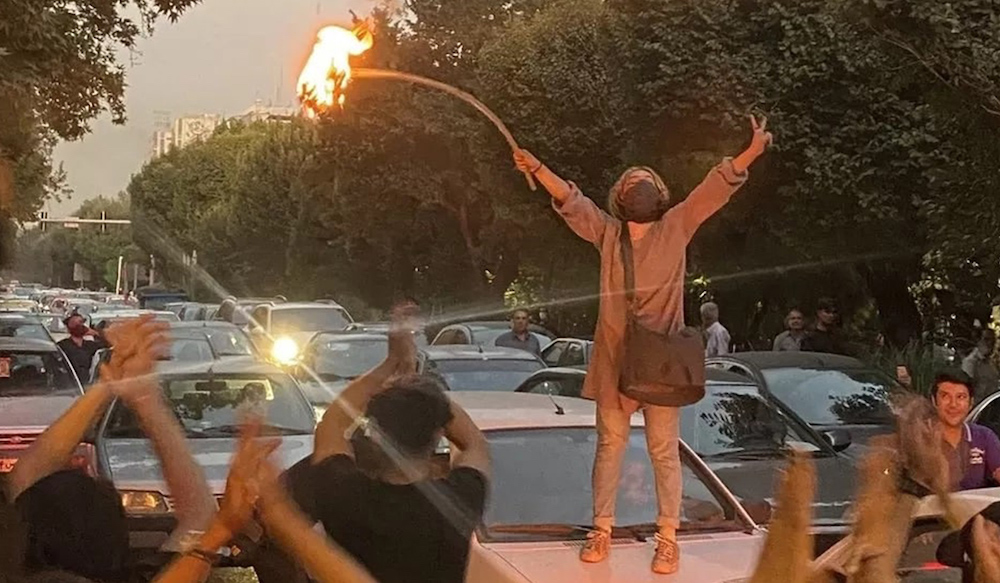
Nevertheless, the women of Iran are not merely victims of the system of sexual apartheid. The leading role played by women in the revolutionary movement of ‘Woman, Life, Freedom’, their prominent presence in the mass uprisings of the past ten years, and their active participation in protests by retirees, teachers, students, and nurses, as well as in the campaigns against executions and the movement for justice, have demonstrated that women are one of the main pillars of any political and social transformation in Iran.
Through their courageous struggles, women have torn down the wall of the Islamic hijab imposed by the Islamic Republic of the capitalist class. They have not only transformed the face of the streets and cities of Iran, but have also reshaped the character of social and protest movements across the country through their active presence.
These sacrifices and achievements have taken place even though the women’s liberation movement has not yet mobilised the immense potential of housewives, working women, and women labourers and toilers living in impoverished neighbourhoods and on the outskirts of cities. By bringing this section of the women’s liberation movement into organised struggle, and through a strategy of alliance with the labour movement, we can make the eradication of patriarchal culture and the establishment of a free, equal, and prosperous society a tangible prospect.
The Communist Party of Iran emphasises that ending violence against women cannot be achieved through piecemeal reforms and government promises; it requires a fundamental transformation of power and property relations and the dismantling of patriarchal structures. Nevertheless, under the current circumstances, the separation of religion from the state, full legal equality between women and men, the abolition of compulsory hijab, and the repeal of all religious and customary laws that, under the pretext of defending so-called family honour, reduce the sentences of perpetrators of crimes against women, are among the fundamental demands of this struggle. Other essential demands include freedom of expression, association, and assembly; the right to abortion and women’s autonomy over their own bodies and lives; the provision of comprehensive social services; equal pay for work of equal value; and the socialisation of domestic and care work.
Honouring the memory of the militant Mirabal sisters, the symbols of the struggle against state violence in the Dominican Republic, and of all freedom-loving and equality-seeking people who have fought and given their lives for women’s liberation, let us turn November 25, the International Day of Solidarity in the Struggle Against Violence Against Women, into a day of renewed commitment: to pushing religion back from interfering in women’s social lives, to fighting against patriarchy and capitalism, and to making ever-greater efforts to unite the women’s liberation movement with the labour movement and other progressive social movements.
Down with the Islamic Republic regime!
Long live freedom, equality, and workers’ government!
Central Committee of the Communist Party of Iran
November 2026